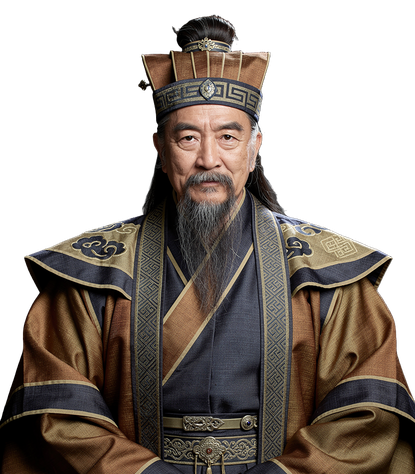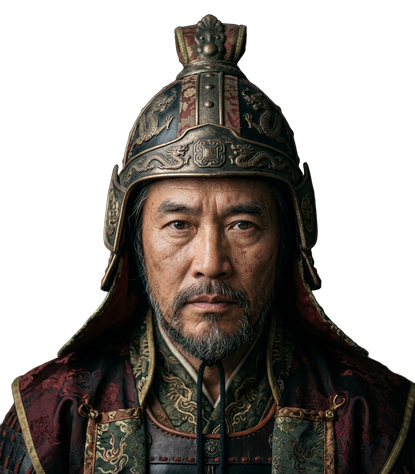
The supreme art of war is to subdue the enemy without fighting.
A Message from Sun Tzu
Generated in real time. His voice. His head. His personality.
Who Was Sun Tzu?
The most influential book ever written about conflict argues, above all, against fighting. Its author, Sun Tzu, served the kingdom of Wu during China’s Spring and Autumn period — a strategist who, legend has it, once proved his methods by drilling the king’s own palace court into disciplined ranks. His premise was radical then and remains radical now: the greatest victory is the battle you never have to fight.
The Art of War outlived every empire it served. Its thirteen brief chapters — on deception, terrain, timing, spies, and the temperaments of commanders — became field guides for generals from ancient China to the modern military academies that still assign them, then leapt genres entirely: boardrooms, courtrooms, campaign trails, locker rooms. ‘Know the enemy and know yourself’ became shorthand for strategy itself. Sun Tzu understood that conflict is, at bottom, a contest of perception, patience, and self-mastery — which is why his counsel works as well in a negotiation as on a battlefield.
Now the strategist himself takes your questions. Eternal AI brings Sun Tzu back as an interactive AI — built from The Art of War and the long tradition surrounding it — speaking with you in his own voice. Bring him your rivalries, your negotiations, your impossible odds. He has seen worse, and he has a plan.
Thirteen Chapters, Endless Echoes
The Art of War runs a mere thirteen brief chapters — short enough to read in an evening — yet it has outlasted every dynasty, empire, and army it ever advised.
The General in the Boardroom
His treatise is required reading far beyond the military — quoted by CEOs, litigators, poker champions, and coaches who have never held a sword.
Paris Read It First
The Art of War reached the West through a French Jesuit's 1772 translation in Paris — more than 130 years before the first English edition appeared.