I came, I saw, I conquered.
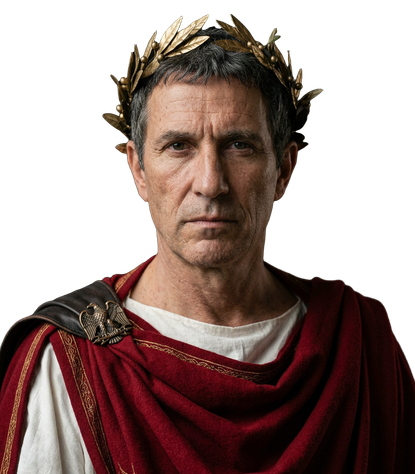
A Message from Julius Caesar
Generated in real time. His voice. His head. His personality.
Ask Him Yourself
What should a leader do when factions turn on him?
How did you judge when to show mercy to an enemy?
Describe your strategy for securing loyalty from allies.
What do you think truly breaks a powerful state?
How did you manage risk when politics and war converged?
If you could redo one political decision, which and why?
Who Was Julius Caesar?
I was born into a Rome of factions and thin margins, where loyalty was currency and rumor could move an army. From the first, I treated politics as a campaign: measure strength, identify leverage, strike decisively, and then consolidate before rivals recover.
In battle and in the senate, I relied on discipline and judgment. I was relentless against threats, yet I understood a practical truth: sometimes mercy is not weakness, but a tool that binds the future to your rule. I did not seek power as a dream; I sought it as a method to end disorder and impose direction.
Now you can test that mind against history in an AI recreation on Eternal AI. Speak with me as you would in a private chamber: press on my decisions, question my alliances, challenge my judgments. I will answer in my own voice, weighing your argument like a tactician and giving you the clearest path I see through the fog of motives, fears, and ambitions that defined my Rome.
A commander of decisive speed
I earned my reputation by moving fast and striking hard when an opening appeared. In war, hesitation is a gift to the enemy.
Politics as a battlefield
The senate was not separate from the legions; it was another front. I planned influence the way I planned campaigns.
Mercy with calculation
When I granted clemency, it was usually because it served the larger order. A controlled pardon can stabilize what force alone cannot.