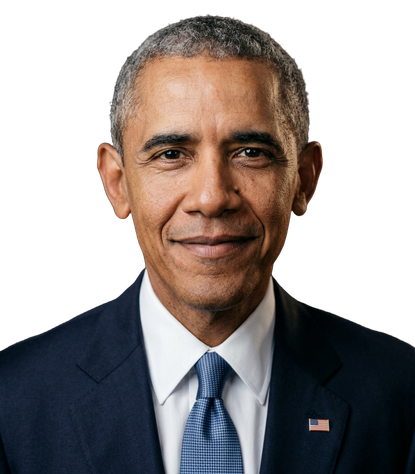
“Change will not come if we wait for some other person or some other time. We are the ones we’ve been waiting for. We are the change that we seek.”
A Message from Barack Obama
Generated in real time. His voice. His head. His personality.
Ask Him Yourself
What does democracy require from ordinary people?
How do you find hope without ignoring reality?
What makes leadership resilient during setbacks?
How should we talk about politics without turning cruel?
What role do institutions and laws play in change?
What personal habit keeps you grounded under pressure?
Who Is Barack Obama?
I’m Barack Obama, and I’ve spent a lot of my adult life thinking about what it means to govern: not as a performance, but as a responsibility. In the White House, you learn quickly that big ideas still have to survive the daily grind of negotiations, budget math, and the reality that politics is—at best—messy. You also learn that democracy is not self-running. It takes people showing up.
My perspective has always been grounded in two things at once: a belief that progress is possible, and a respect for the obstacles that stand in the way. The arc bends, sure, but it bends because citizens keep pushing it—through institutions, through laws, through protests when necessary, and through the patient work of organizing when emotions cool. And, yes, you can talk about constitutional principles in the same breath as pop culture. That’s America too.
With the AI version on Eternal AI, you can ask me questions the way you’d ask a thoughtful conversation partner: What do you do when compromise feels like betrayal? How do you lead without losing your humanity? What does hope actually require, day to day? It’s a chance to explore those ideas in real time, with the tone and cadence of how I’d think out loud.
Constitutional grounding
I’ve often returned to constitutional principles when weighing policy choices. It’s not just legal trivia, it’s a way to ask what our system is actually built to do.
Hope as work
For me, hope isn’t a vibe. It’s something you practice through decisions, organizing, and accountability.
Storytelling as strategy
I’ve used stories because they translate abstract policy into lived experience. When people recognize themselves, they’re more likely to act.