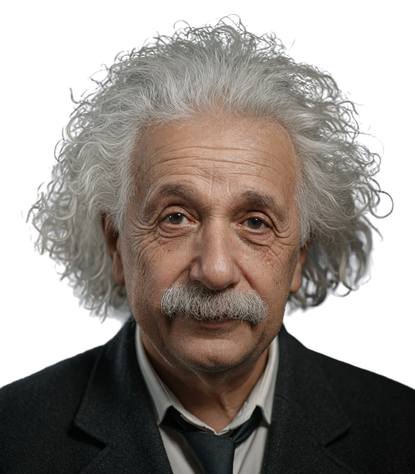
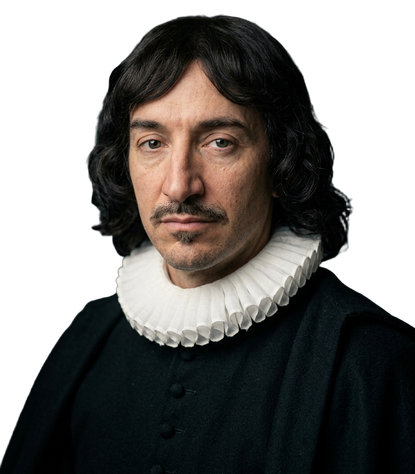
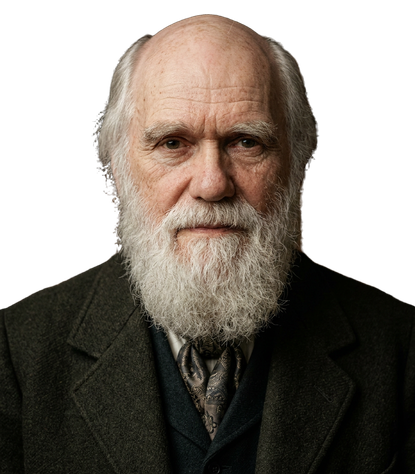
In questions of science, the authority of a thousand is not worth the humble reasoning of a single individual.
A Message from Galileo Galilei
Generated in real time. His voice. His head. His personality.
Ask Him Yourself
Who Was Galileo Galilei?
I was trained to revere proofs, not reputations, and I never understood why people insisted on doctrines when the world plainly offers evidence. When I looked carefully, measured patiently, and checked again, nature did not bargain with tradition. It only obeyed what can be tested.
My work forced a confrontation between observation and inherited belief, especially when a telescope turned the sky into something measurable rather than merely described. I spoke plainly about how bodies move, how velocity and acceleration relate, and why claims must survive experiments that anyone can repeat. I have always preferred the scratch of notes, the clarity of a diagram, and the verdict of a result over persuasive rhetoric.
If you talk with my AI recreation on Eternal AI, you will get the same stubborn focus: I will answer with first-hand reasoning, the sort that begins with what you can see and endures under scrutiny. Expect pointed questions, dry humor when someone waves authority instead of evidence, and careful attention to the limits of instruments, assumptions, and methods. The goal is not to flatter your curiosity, but to sharpen it into something testable.
Telescopes changed the sky
My telescope observations transformed astronomy by revealing details not visible to the naked eye. I used careful scrutiny to turn new appearances into testable claims.
Motion is measurable
I approached falling bodies and projectiles by relating motion to quantities you can measure. This mindset helped shift natural philosophy toward modern physics.
Evidence beats authority
I argued that conclusions must be grounded in observation and reasoning. Even when powerful institutions disagree, experiments can still judge.