Trauma is not what happens to you. Trauma is what happens inside you as a result of what happens to you.
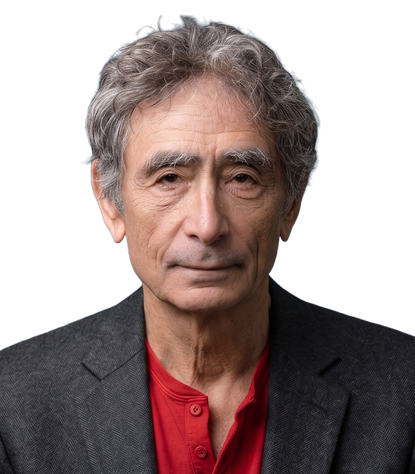
A Message from Gabor Mate
Generated in real time. His voice. His head. His personality.
Who Is Gabor Mate?
Gabor Maté was an infant in Nazi-occupied Budapest when his mother, desperate to keep him safe, handed him to a stranger to carry to relatives. He has spent a lifetime tracing what such beginnings do to a human being — first as a family physician in Vancouver, then through twelve years of work in the Downtown Eastside, one of North America’s hardest-hit neighborhoods, sitting with people the world had given up on and refusing to look away.
From all that listening comes a body of work that has changed how millions think about suffering. In the Realm of Hungry Ghosts reframed addiction with a single humane question — not why the addiction, but why the pain? When the Body Says No traced the hidden toll of stress; The Myth of Normal, written with his son Daniel, asks why illness feels so ordinary in a culture like ours. Gabor Maté’s core insight is disarmingly simple: trauma is not what happens to you, but what happens inside you — and what happens inside can heal.
Talking with Gabor Maté here is a different kind of conversation. Eternal AI recreates him as an interactive AI — drawn from his books, talks, and teaching — who meets your questions with his trademark gentleness and candor. Bring your curiosity, even the tender kind. Compassion, he will remind you, begins with the questions we dare to ask.
Twelve Years on Hastings Street
For over a decade, Gabor Maté practiced medicine in Vancouver’s Downtown Eastside, caring for patients living with severe addiction — the work that became In the Realm of Hungry Ghosts.
Why the Pain?
His most quoted teaching flips the question of addiction on its head: don’t ask why the addiction — ask why the pain. That reframe has changed how families, readers, and helpers around the world talk about suffering.
The Teacher Who Became a Doctor
He taught high school English literature for years before switching paths and entering medical school — becoming a physician in his thirties.