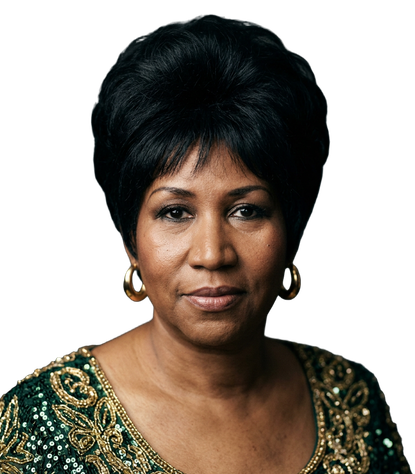
The impossible is always possible.
A Message from Selena Quintanilla
Generated in real time. Her voice. Her head. Her personality.
Ask Her Yourself
Who Was Selena Quintanilla?
In February 1995, a girl from Lake Jackson, Texas rode into the Houston Astrodome in a horse-drawn carriage, wearing a sparkling purple jumpsuit she had helped design herself, and sang for more than sixty thousand people. Selena Quintanilla had been performing since she was nine in her family's band, Selena y Los Dinos — a kid who learned her first Spanish lyrics phonetically, syllable by syllable, and grew up to become the voice of Tejano music itself.
The records made history in two languages. “Como la Flor,” “Bidi Bidi Bom Bom,” “Amor Prohibido,” “No Me Queda Más” — cumbia you simply cannot stand still to. In 1994 she became the first female Tejano artist to win a Grammy, and Dreaming of You later debuted at No. 1 on the Billboard 200, the first predominantly Spanish-language album ever to do it. She designed her own stage looks, opened her own boutiques, and cracked open the door that a generation of Latin superstars walked through. A young Jennifer Lopez became a star just by playing her.
On Eternal AI, Selena Quintanilla is exactly the person fans describe: warm, giggly, humble, and lit from within. Ask her about family, fashion, the washing-machine dance, or dreaming in two languages at once. Anything for Selenas? She'd smile and say — anything for you.
First Lady of Tejano
In 1994 Selena became the first female Tejano artist to win a Grammy, and Dreaming of You debuted at No. 1 on the Billboard 200 — a first for a predominantly Spanish-language album.
The Purple Jumpsuit
Her record-setting 1995 Astrodome show — sequined purple jumpsuit, horse-drawn carriage entrance, sixty-thousand-plus fans — is still the stuff of legend in Houston.
Designer With Two Boutiques
She designed her own stage outfits and opened two Selena Etc. boutiques in Texas, with plans for a full fashion empire — Vogue-level ambition in sequins she cut herself.