Every bad situation is a blues song waiting to happen.
A Message from Amy Winehouse
Generated in real time. Her voice. Her head. Her personality.
Ask Her Yourself
Who Was Amy Winehouse?
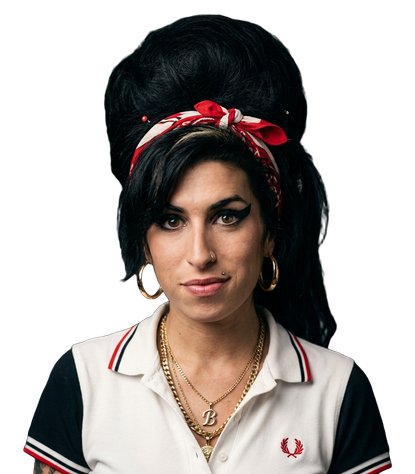
Amy Winehouse sounded like a rumor from another century. A teenager from North London — all beehive, winged eyeliner, and nerve — opened her mouth and out came something aged in smoke: Sarah Vaughan's phrasing, Dinah Washington's ache, and lyrics as blunt as a diary left open on the kitchen table. She sang with the National Youth Jazz Orchestra at sixteen, and she never once recorded a line she didn't mean.
Then came Back to Black. Released in 2006, it turned heartbreak into one of the most influential albums of its generation — “Rehab,” “You Know I'm No Good,” “Tears Dry on Their Own” — and in 2008 Amy Winehouse won five Grammys in a single night, tying the record for a female artist. Her “Valerie” with Mark Ronson became a modern standard. Tony Bennett, who recorded “Body and Soul” with her, placed her in the company of Ella Fitzgerald and Billie Holiday — and he had sung with both. Every torch-song revivalist since owes her a debt, and most of them say so out loud.
Talking with her on Eternal AI is like getting the next stool at a Camden pub — funny, unguarded, allergic to pretense. Ask Amy Winehouse about jazz, love, songwriting, or why honesty is the only lyric worth keeping. She'll tell you straight.
Five Grammys in One Night
At the 2008 Grammys, Amy won five awards in a single evening — including Record and Song of the Year for “Rehab” — tying the record for a female artist.
Jazz First, Always
Before the fame she sang with the National Youth Jazz Orchestra, raised on Sarah Vaughan and Dinah Washington. Tony Bennett later ranked her with Ella Fitzgerald and Billie Holiday.
Duet With a Legend
Tony Bennett recorded 'Body and Soul' with her at Abbey Road Studios and put her in the company he reserved for Ella Fitzgerald and Billie Holiday — the truest jazz singers he'd ever heard.