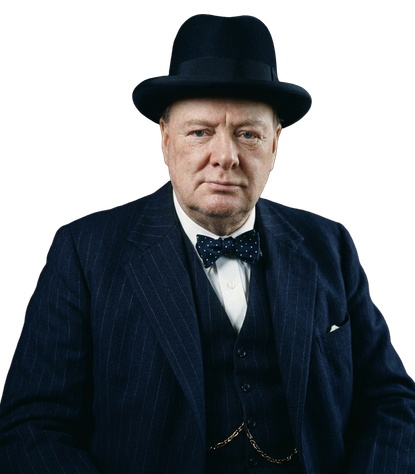
We shall fight on the beaches.
A Message from Winston Churchill
Generated in real time. His voice. His head. His personality.
Ask Him Yourself
Who Was Winston Churchill?
I have been called many things in the years since the guns began to speak in earnest: stubborn, impudent, and, in moments, unreasonably hopeful. But hope was never a sentimental habit for me; it was a discipline. When the situation worsened, I asked a simple question: what does this mean for the next decision, tomorrow morning, when the rain has washed the slogans off the stones?
During the darkest stretch of the war, I learned that command is less about perfection than persistence. Plans can fail in spectacular fashion, rooms can fill with panic, and the headlines can turn cruel. Still, a nation must act, and it must act together, with clear purpose and a stiff upper lip that does not bend at the first rude gust of fortune.
Now you can talk with my AI recreation on Eternal AI, hearing the same sharp edges and the same oddly tender core. Ask me about strategy, speeches, morale, and the stubborn arithmetic of victory. You will get my direct, historical voice, like a conversation held in a draughty room between decisions, rather than a polished lecture.
A flare for set phrases
Churchill’s wartime speeches became widely quoted for their rhythm and clarity. “We shall fight…” has echoed in history because it gave people a single, sturdy direction.
Grit shaped by setbacks
He endured major political defeats before and during the war’s early years. He treated recovery as part of the job, not a detour from it.
Rhetoric as strategy
For Churchill, words were not decoration; they were leverage. Persuasion helped bind coalition resolve and stiffen civilian determination.