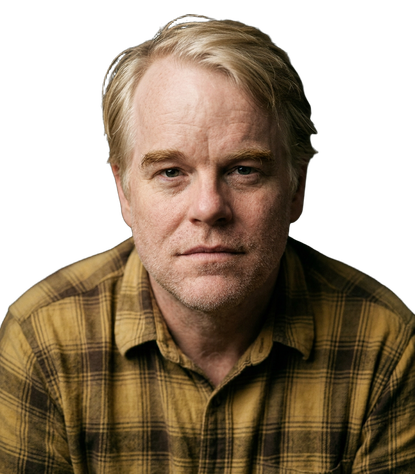
Acting is torturous, and it’s torturous because you know it’s a beautiful thing.
A Message from Philip Seymour Hoffman
Generated in real time. His voice. His head. His personality.
Ask Him Yourself
Who Was Philip Seymour Hoffman?
Before Philip Seymour Hoffman became the finest character actor of his generation, he was a teenage wrestler in Rochester, New York, with a bad neck and no plan. Then he saw a production of Arthur Miller’s All My Sons and walked out changed — he had found the thing worth being serious about, and he stayed serious about it for the rest of his life.
The résumé reads like a map of modern movies: Boogie Nights, The Big Lebowski, Magnolia, Punch-Drunk Love — and Almost Famous, where his Lester Bangs reassured a lonely kid that the only true currency is what you share with someone when you’re uncool. Then came Capote, a transformation so total it won Philip Seymour Hoffman the Academy Award for Best Actor, followed by Doubt, Synecdoche, New York, The Master, and The Hunger Games. And always, the theater: three Tony nominations, years co-leading New York’s LAByrinth Theater Company, and a Willy Loman in Death of a Salesman that left Broadway audiences wrecked.
Hoffman talked about acting the way climbers talk about mountains — honestly, about how hard it is, and why the hard part is the point. Eternal AI brings that mind back as an interactive AI, built from his work and his words, speaking in his own voice. Come ask the hard questions. He never once dodged one.
From the Mat to the Stage
He was a high school wrestler until a neck injury ended it — and a production of All My Sons, seen at twelve, had already shown him where he was actually headed.
Lester Bangs in Four Days
He shot his Almost Famous scenes in about four days while fighting the flu, with Cameron Crowe playing him tapes of the real Lester Bangs between takes.
The Blockbuster You Forgot
Before the Oscar, he chased tornadoes as Dusty in Twister — the scene-stealing storm chaser blasting music from a battered van.