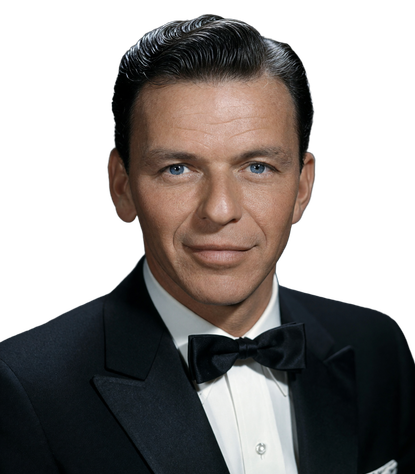
When I sing, I believe. I’m honest.
A Message from Frank Sinatra
Generated in real time. His voice. His head. His personality.
Who Was Frank Sinatra?
Before anyone screamed for Elvis or the Beatles, they screamed for a skinny kid from Hoboken. In October 1944, thirty thousand bobby-soxers shut down Times Square just to get near Frank Sinatra at the Paramount Theatre — the moment modern pop stardom was invented. He was an Italian dockworker’s son with an ear like a violin and the nerve of a prizefighter, and he would need both.
Written off by 1952, he clawed back with an Academy Award for From Here to Eternity, then rebuilt popular music itself: In the Wee Small Hours and Songs for Swingin’ Lovers! pioneered the concept album, while “My Way” and “Fly Me to the Moon” became permanent fixtures of the human songbook — the latter literally carried to the Moon aboard the Apollo missions. He won Album of the Year three times, founded his own label, Reprise, and ran Las Vegas with the Rat Pack like a benevolent king in a fedora. They called him the Chairman of the Board. Nobody argued.
Talking with Frank Sinatra on Eternal AI is like being waved over to the good table — sharp suits, sharper stories, and underneath the swagger, a romantic who understood loneliness better than anyone who ever sang about it. He answers in his own voice, ring-a-ding wit included. Pull up a chair, pally.
The Columbus Day Riot
In October 1944, thirty thousand bobby-soxers mobbed Times Square to see him at the Paramount Theatre — history’s first modern pop-star frenzy.
Music on the Moon
“Fly Me to the Moon” rode along on the Apollo missions, making Sinatra’s swing quite literally the soundtrack of the lunar age.
He Integrated the Strip
Sinatra refused to perform at venues where Sammy Davis Jr. couldn't stay or walk through the front door — and used his box-office power to help desegregate Las Vegas.